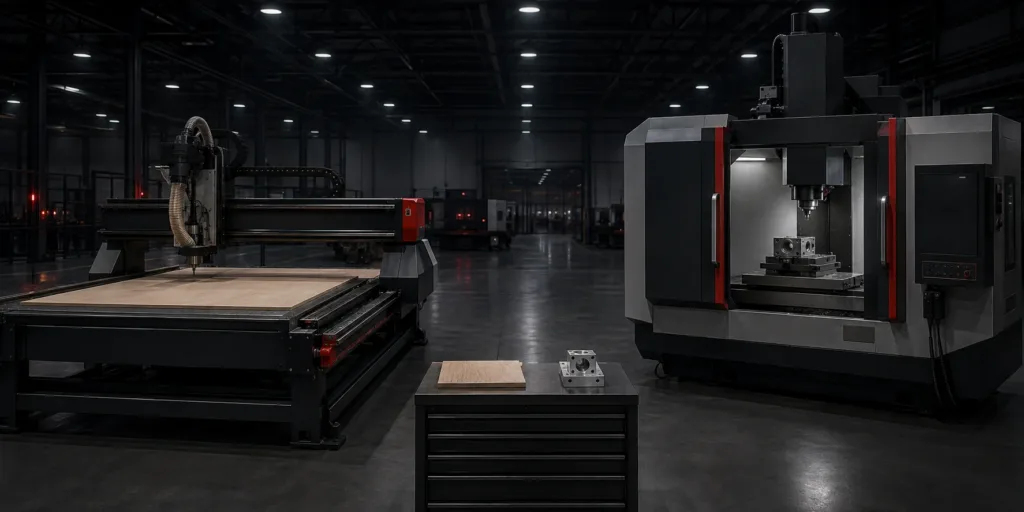
A CNC router is a production system in which a cutting tool moves on computer-controlled axes to cut, groove, drill and shape sheet or block material. It has a wide range of uses, from furniture to signage, from composite processing to prototyping.
“CNC” means the movements are numerically controlled, while “router” refers to a high-speed cutting tool removing material. The quality of the result depends on frame rigidity, spindle selection, tooling, workholding, the motion system and correct cutting parameters working together.
How does a CNC router work?
The drawing of the part is prepared in CAD software. CAM software converts this geometry into tool paths and defines the tool to be used, the depth of cut, the feed rate and the spindle speed. The resulting program is transferred to the CNC control unit.
Once the material is fixed on the table, the cutting tool follows the programmed path on the X, Y and Z axes. On some systems a rotary axis or additional machining heads allow cylindrical and more complex parts to be processed as well.
What operations can a CNC router perform?
- External and internal contour cutting
- Grooving and pocketing
- Drilling
- Surface levelling
- V-grooving and chamfering
- Relief and three-dimensional surface machining
- Lettering, patterns and engraving
- Preparing folding grooves in composite panels
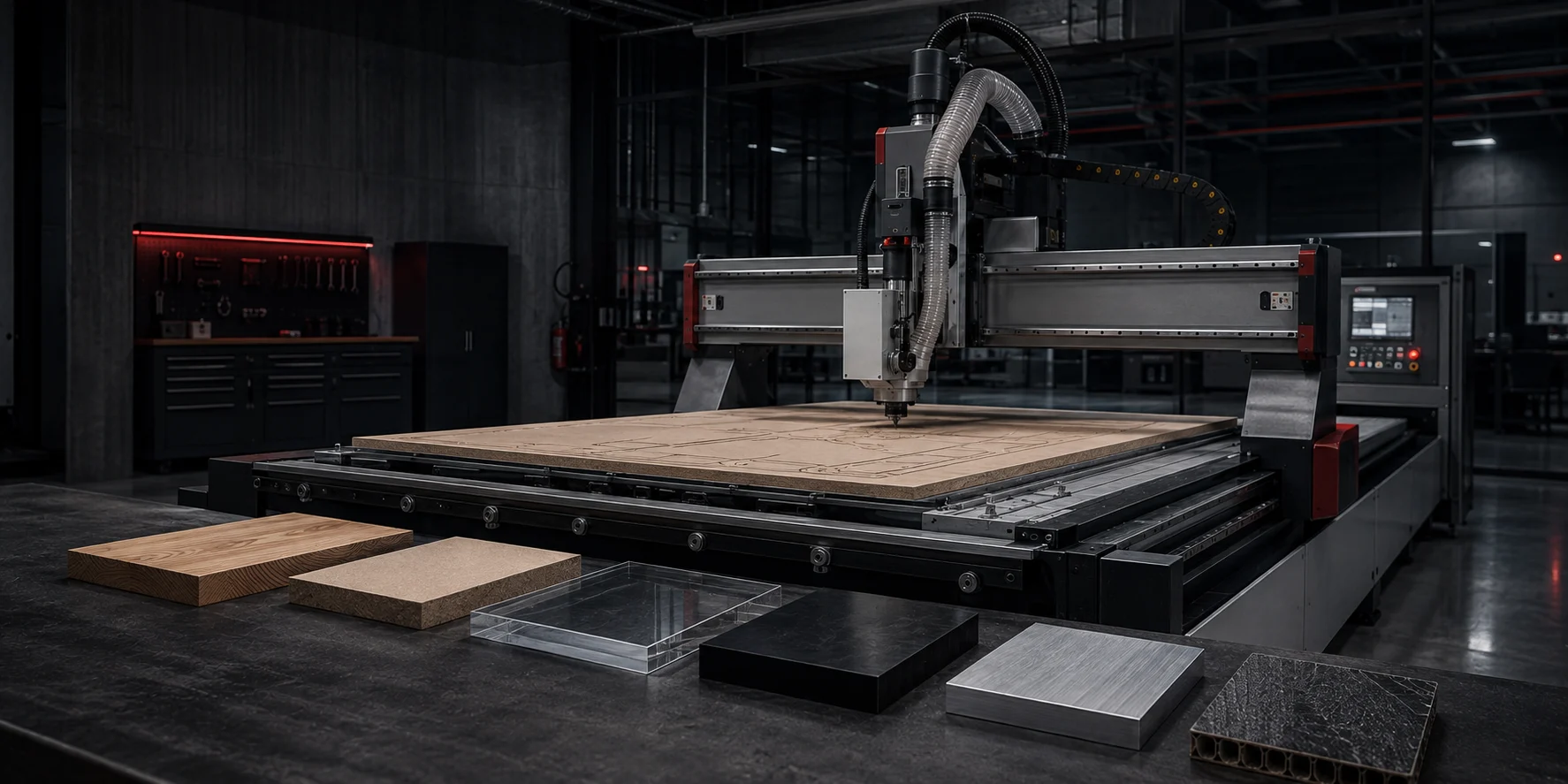
Main materials that can be processed
Wood and wood-based materials
Solid wood, MDF, melamine-faced chipboard, plywood and similar panels make up a significant share of CNC router applications. Furniture parts, doors, decorative panels, moulds and interior elements can be produced. Chip evacuation and a suitable extraction system matter for both surface quality and the working environment.
Plastics and acrylic
Acrylic, PVC foam board, polycarbonate and various engineering plastics can be processed with the right tooling. Tool geometry, speed and feed must be balanced correctly to prevent heat build-up. Otherwise the material can melt or stick to the cutter.
Aluminium and light metals
If machine rigidity, spindle power and cooling conditions are suitable, aluminium sheet and some light metal parts can be machined. Metal machining requires more controlled depths of cut, appropriate cutting tools and effective chip evacuation compared with wood.
Composite materials
Aluminium composite panel, carbon fibre or glass-fibre reinforced materials can be processed with application-appropriate tooling and dust control. Because abrasive composites can shorten tool life quickly, cutter selection is important.
Foam, rubber and modelling materials
Packaging inserts, modelling blocks, technical foams and certain elastomers can be processed with special cutters. The material must be held without being compressed and must not deform during cutting.
Why do the table and workholding method matter?
If the part moves during machining, dimensional and surface quality suffer. A vacuum table is a common solution for fixing large sheets quickly. For small parts or materials with high vacuum leakage, mechanical clamps, fixtures, double-sided tape or dedicated holding plates can be used.
As well as the capacity of the vacuum pump, dividing the table surface into zones, the seal layout and the flatness of the sacrificial board all affect holding performance.
Spindle and tool selection
Spindle power alone is not a sufficient selection criterion. Speed range, torque characteristics, the collet system, the cooling method and the need for automatic tool changing should be assessed together. Tool diameter, number of flutes and cutter geometry should be chosen to suit the material.
The wrong tool can cause burr, burn marks, vibration, dimensional deviation and short tool life. Feed and speed should be set taking the chip load recommended by the cutter manufacturer into account.
What information should be prepared when choosing a CNC router?
- Materials to be processed and maximum thicknesses
- Largest and smallest part dimensions
- Daily or monthly production quantity
- Required tolerance and surface quality
- Number of tools to be used
- Vacuum, chip extraction and cooling requirements
- Need for three-dimensional machining or a rotary axis
- The plant’s space, electrical and compressed-air infrastructure
Safe and efficient use
Correct tool clamping, secure workholding and working dust and chip extraction are basic safety requirements. Before starting the program, the operator should check the zero points, tool length and simulation. The maintenance plan should cover the spindle, collets, guides, lubrication system, vacuum filter and extraction line.
In summary: Properly configured, a CNC router is a flexible system that can process very different materials on a single production platform. The best result comes from choosing the machine not by table size alone, but by material, tooling, workholding and real production tempo.