Once the decision to invest in a new production machine has been made, the second important question is the financing method: should the machine be bought with equity, financed with a loan, or acquired through leasing? Each option has different effects on cash flow, total financing cost and the business’s room for manoeuvre.
No single method is right for every business. The decision should be assessed together with the investment amount, working capital requirements, the currency of revenue, payment capacity and the machine’s production start plan.
What is a direct purchase?
In a direct purchase the machine price is paid from the business’s own funds or with a bank loan. Using equity can reduce financing costs, but it lowers the cash reserve and the funds available for other investments.
In a loan purchase the machine passes into the business’s ownership while the debt runs as a separate financing relationship. Interest, collateral, term and payment structure vary with the bank and the financial position of the business.
What is leasing?
In leasing, also known as financial leasing, the financial institution buys the machine and makes it available to the business for a defined period. Payments are made according to the plan in the contract; transfer of ownership or other options at the end of the contract depend on its terms.
Leasing can be considered for high-value equipment investments in order to spread the initial cash outflow over time and bring the payment plan closer to the period in which the investment generates revenue.
Purchase and leasing compared
| Criterion | Direct purchase | Leasing |
|---|---|---|
| Initial cash requirement | Can be high depending on the payment method | Can be spread over time depending on the down payment and contract structure |
| Ownership | With the business once purchase conditions are complete | With the financial institution during the contract |
| Payment flexibility | Depends on equity or the loan plan | Depends on the term and instalment structure in the contract |
| Collateral structure | Additional collateral may be required by loan terms | The financed equipment is one of the main securities of the transaction |
| Total cost | Should be calculated including the opportunity cost of using cash | Should be calculated with rental, financing and contract costs |
When can leasing be considered?
- If the business wants to preserve working capital for raw materials, staff and order financing
- If the aim is to match payments with the revenue the machine will generate
- If the initial burden of a high-value investment is to be spread over time
- If the business needs to keep existing credit limits available for other needs
- If balancing foreign-currency income and expenses is planned
When can a direct purchase be advantageous?
- If the business has a strong cash position and low liquidity needs
- If financing costs significantly increase the total cost
- If an early sale or other disposal of the machine is planned
- If carrying no debt after payment is a strategic priority
Do not look at the monthly instalment alone
An instalment that looks low can result in a long term or a high total financing cost. The comparison should assess the down payment, interim payments, final payment, commission, insurance, currency effects and end-of-contract conditions together.
The currency of the payments also matters. If revenue and debt are not in the same currency, exchange rate movements can change cash flow. Preparing different currency scenarios makes the risk visible.
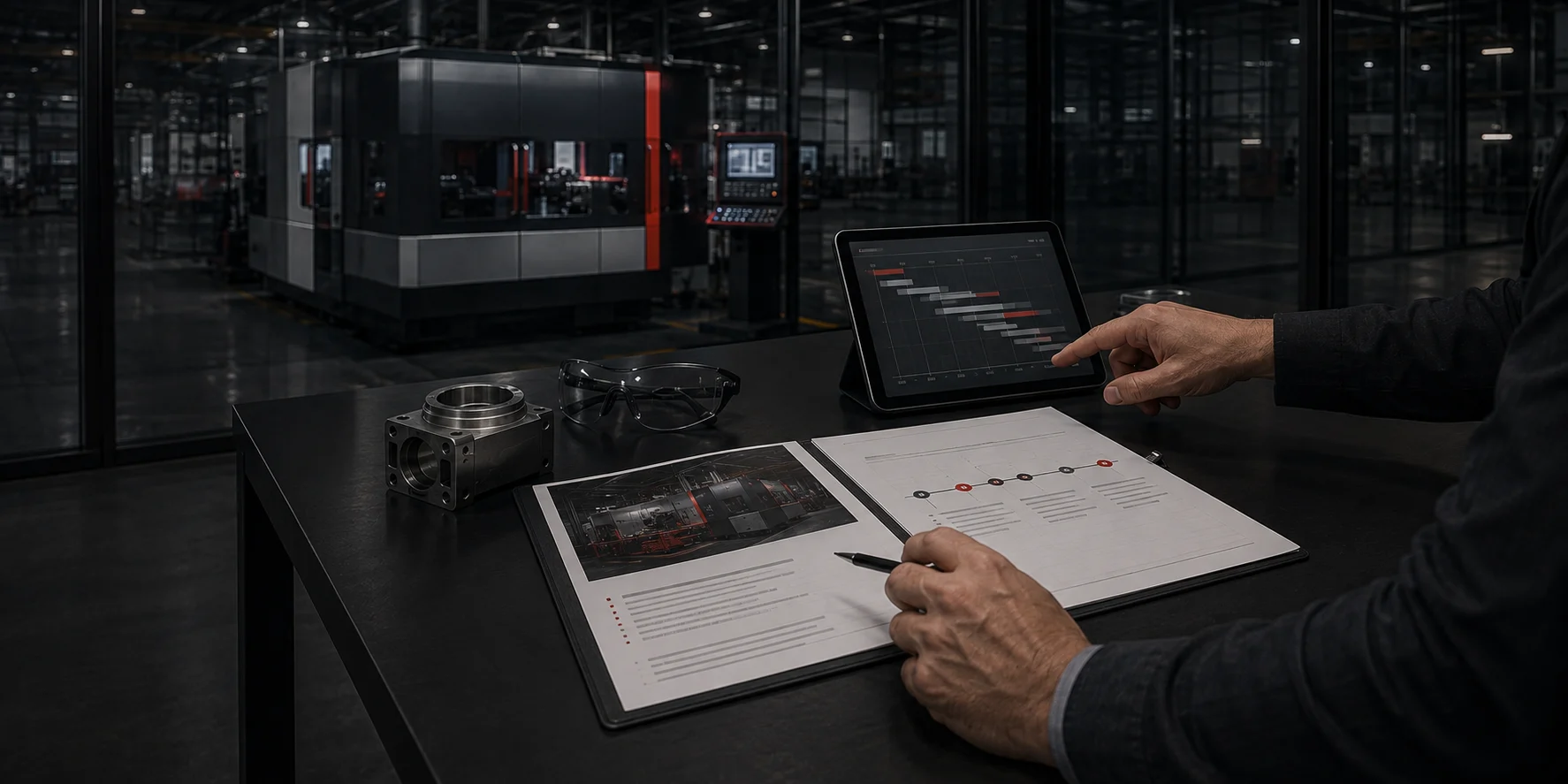
The production start date affects the payment plan
The financing plan should not be finalised before the machine’s order, delivery, installation and commissioning times are defined. If payments are concentrated before production starts, the business may begin servicing debt without generating revenue.
Preparation periods after commissioning — operator training, sample production and customer approval — should also be included in the cash flow.
The table to prepare before deciding
- List the machine, installation and working capital requirements separately.
- Show all payments for each financing option in the same currency.
- Calculate the expected net cash contribution from monthly production.
- Create cautious sales and exchange rate scenarios.
- Compare the payment schedule with the machine’s production start date.
- Confirm the tax and accounting outcomes with your financial adviser.
- Review the insurance, early settlement, transfer and default terms in the contract.
The financing choice is not separate from the production decision
A longer payment plan can ease cash flow; but if the machine’s capacity is not used, the investment will still not be efficient. The financing decision should be taken together with real order volume and the net contribution the machine will generate.
In summary: A purchase can be advantageous in terms of ownership and total cost, while leasing can be advantageous in terms of liquidity and payment planning. The right option is not the one with the lowest instalment, but the structure that safely realises the investment’s production potential while protecting the business’s cash flow.