Laser cutting is the controlled separation of a metal or non-metal material using a high-intensity laser beam. Working without contact, this technology offers a narrow kerf, high repeatability and the ability to process complex geometries quickly compared with traditional cutting methods. For this reason it is used across a wide range of production environments, from prototyping to series manufacturing.
However, a good laser cutting result does not depend on a powerful laser source alone. Correct focusing of the beam, the stability of the motion system, the choice of assist gas, the surface condition of the material and the cutting parameters must all be managed together.
How does laser cutting work?
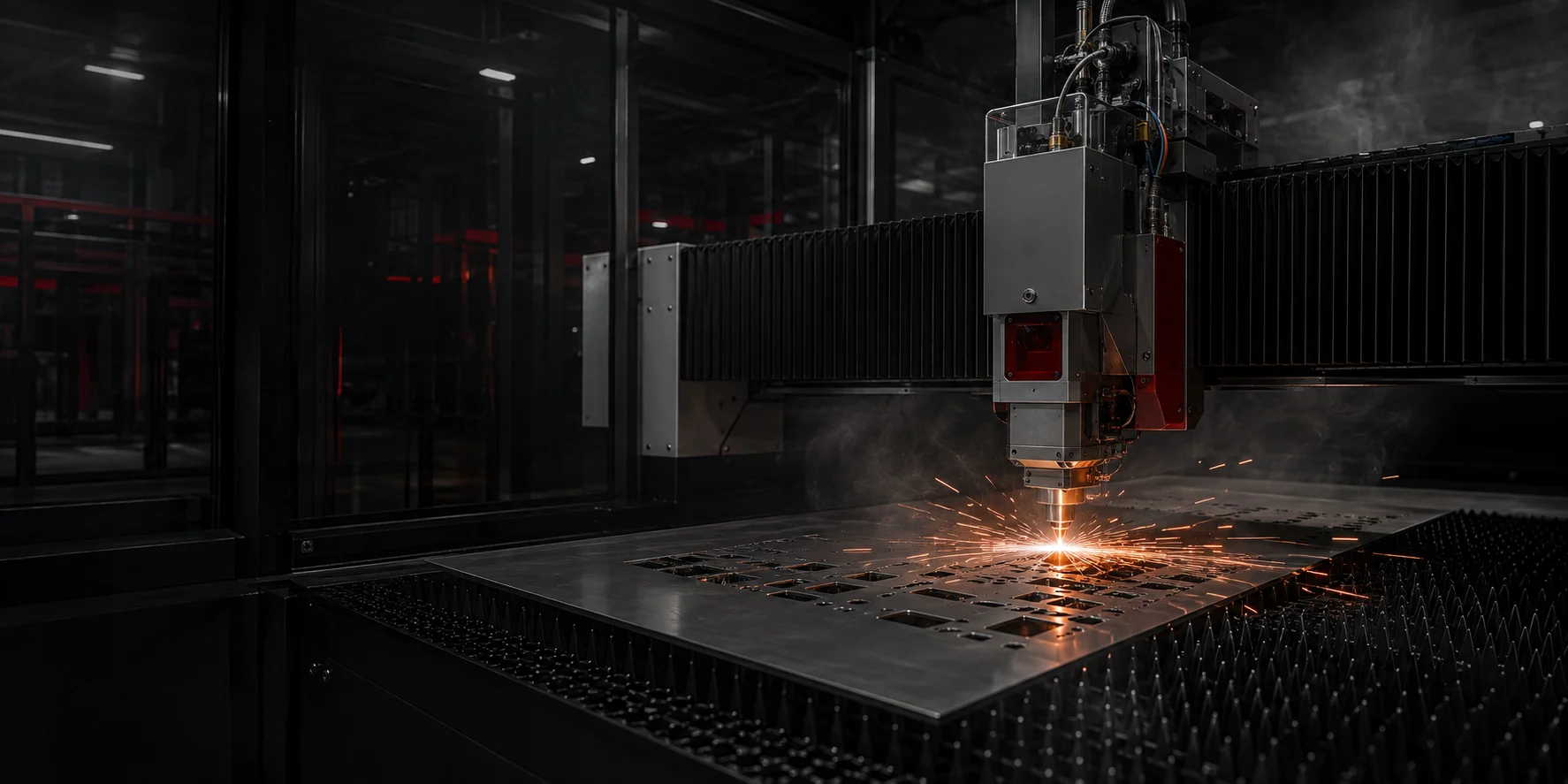
The beam produced in the laser source is carried to the cutting head through an optical system or a fiber line. Lenses in the cutting head focus the beam onto a very small point. The high energy density at this focal point melts, burns or vaporises the material to form the cut channel.
The assist gas used during cutting helps to clear the molten material out of the kerf. Depending on the application, oxygen, nitrogen or compressed air may be preferred. The cutting head follows the tool path defined by the CNC control system, ensuring the part is cut to the geometry in the digital drawing.
Core components of the laser cutting process
- Laser source: Produces the beam energy required for cutting.
- Cutting head: Focuses the beam onto the material and directs the assist gas into the cutting zone.
- CNC control system: Manages the axes, speed, acceleration and cutting commands.
- Motion system: Moves the cutting head or the table precisely and repeatably.
- Assist gas system: Has a direct effect on cut quality, speed and edge appearance.
- Cooling and filtration: Helps the system run stably and removes fumes and particles from the environment.
Which materials can be cut with a laser?
The materials that can be cut vary with the laser technology used. Fiber laser systems are mostly used on metals such as carbon steel, stainless steel, galvanised sheet, aluminium, brass and copper. CO₂ laser systems are common on acrylic, wood-based materials, fabric, leather, paper and certain plastics.
Not only the type of material matters; its thickness, surface coating, reflectivity and response to heat must also be considered. Some plastics can release harmful gases when laser processed, so they should not be cut before their suitability is confirmed.
Why is it preferred in industrial production?
High accuracy and repeatability
Thanks to the digital tool path, the same part can be produced consistently across different production batches. A properly set up process reduces the need for correction and rework before assembly.
Flexibility on complex geometries
Because laser cutting requires no physical die, design changes can be transferred to production quickly. Internal cut-outs, tight corners, varied contours and customised parts can be processed in the same production flow.
Efficient material use
Nesting software that optimises how parts are laid out on the sheet helps reduce scrap. A narrow kerf can also contribute to getting more parts out of the same sheet.
Suitability for automation
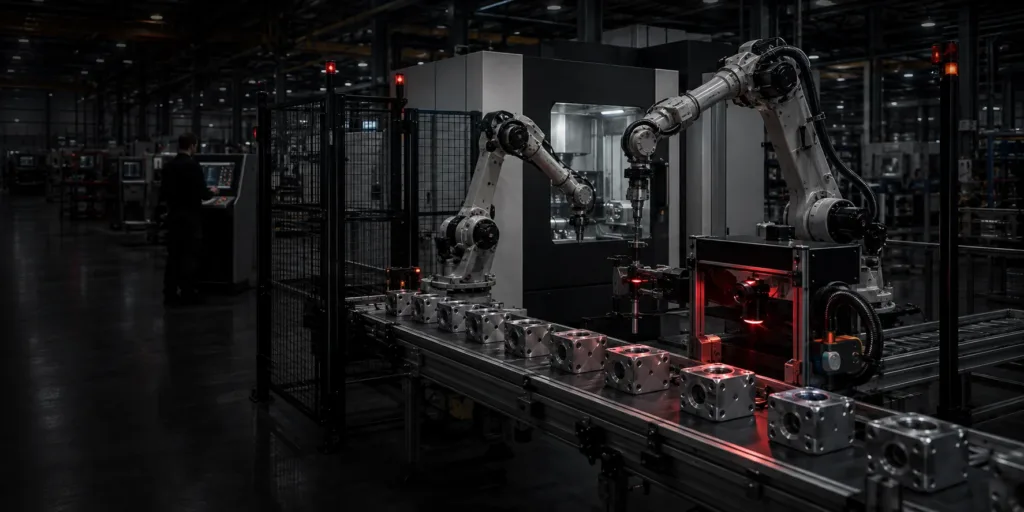
Laser cutting can be integrated with automatic loading and unloading, part sorting, stock management and production tracking systems. This improves not only cutting speed but the total efficiency of the processes before and after cutting.
What determines the cutting result?
Cut quality depends on many variables being set together: laser power, feed rate, focal position, gas type and pressure, nozzle selection, material thickness and surface condition. The highest power or the highest speed does not always give the best result. The aim is to strike the right balance between a burr-free edge, a narrow kerf, low heat input and stable production.
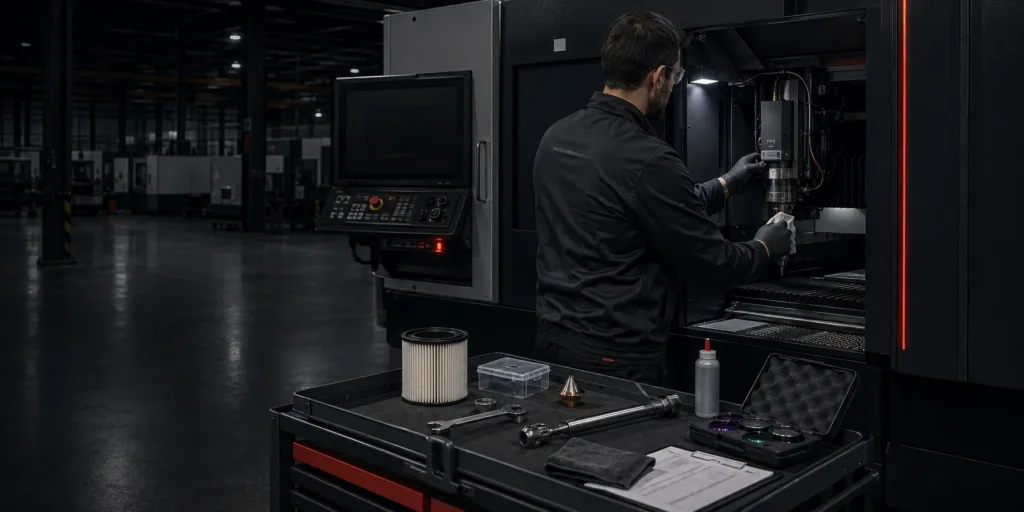
The mechanical rigidity of the machine, axis accuracy, the cleanliness of the cutting head and the operator’s process knowledge also affect the result. It is therefore important to run sample cuts before production and to record the parameters.
In which industries is laser cutting used?
- Machinery and equipment manufacturing
- Automotive and its supply industry
- Metal furniture and decoration
- Electrical panel and cabinet production
- Signage, advertising and display systems
- Ventilation and air conditioning
- Textile, packaging and leather processing
- Prototyping and custom part production
How is a sound laser cutting process planned?
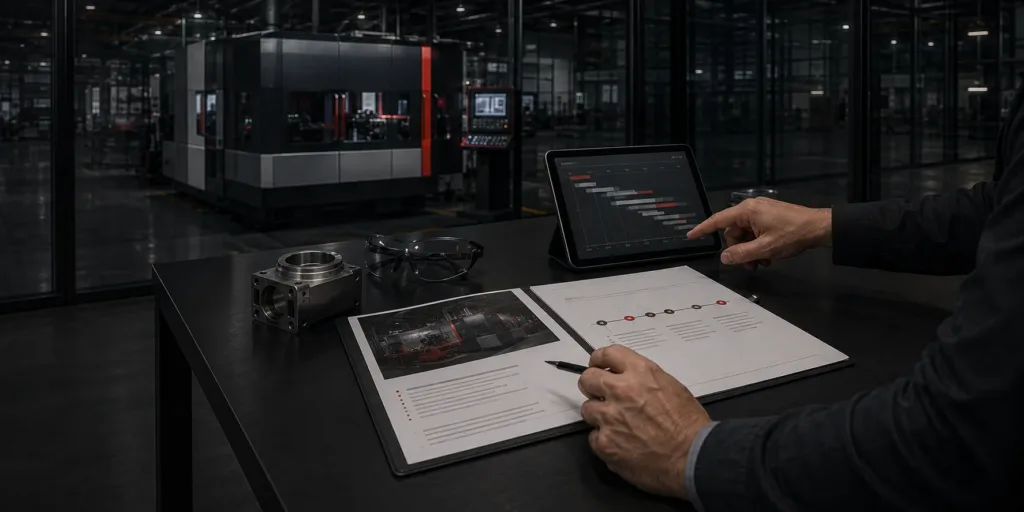
Planning should start by defining the materials to be cut and the annual production volume. Part dimensions, tolerance expectations, shift patterns, operator competence and the operations that follow cutting should be assessed together. Instead of focusing on cutting time alone, loading, unloading, sorting, maintenance and possible downtime should also be included in the total process calculation.
The right technology is not the system with the highest technical specification, but the one that best fits the plant’s actual production flow and delivers a sustainable result.
In summary: With the right process design, laser cutting is a powerful manufacturing method that can improve quality, production speed and material efficiency at the same time. When planning an investment or a process, material, capacity, quality and operating costs should be considered together.